COVID-19 Research on Black Women Gets Personal
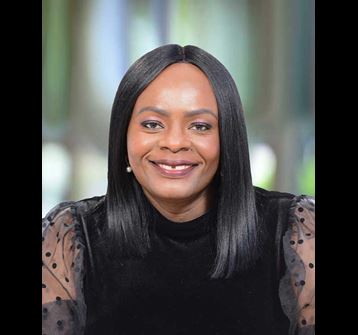 Michelle Albert, like most of us, has plenty of questions about the global COVID-19 pandemic. Unlike most of us, she’s doing more than wondering. She’s delving deep for answers.
Dr. Michelle Albert is a San Francisco cardiologist. She’s also an African American woman who has long had a keen interest in science and history — namely the slave trade and social factors that have long affected Black persons.
So when Albert, who’s president of the Association of Black Cardiologists, learned the American Heart Association was seeking scientific research proposals studying the effects of COVID-19 on the heart and brain, she felt especially compelled to submit her proposal to study the experiences and cardiovascular effects of the disease on Black women.
The timing for her proposal was at once serendipitous and sobering.
“I submitted it the same day my mother was admitted to the hospital for COVID-19,” said Albert, a professor in medicine at the University of California at San Francisco and director of the CeNter for the StUdy of AdveRsiTy and CardiovascUlaR DiseasE (NURTURE Center). “I was trying to understand COVID-19 health disparities. I also wanted to submit a grant application for COVID-19 specifically among African American women because Black women tend to get the short stick in society.”
At the same time, Albert was in tears. She didn’t know whether her mom was going to make it or not. I’m thinking, “I really have to get this, because if she were to die, her death is not going to be in vain,’” Albert said.
Her proposal was one of 750 submitted and only one of a dozen accepted. More importantly, her mother recovered.
The Health Equity Angle
“The disparities we see in COVID-19 mortality where you see a higher rate in Black individuals is just about as much as the risk factors — having cardiovascular disease, high blood pressure, diabetes, obesity — as much as the social factors,” Albert said.
According to the U.S. Census, Black people make up just under 14% of the U.S. population. Yet the Centers for Disease Control and Prevention reports Black people account for about 25% of all people hospitalized with COVID-19 and are 4 times more likely to die from the disease compared to White individuals.
Every year, nearly 50,000 African-American women die from cardiovascular diseases. Almost half over age 20 have cardiovascular disease.
“I felt it was really important to get to the bottom of understanding the experiences of Black women in this pandemic and their COVID-19 experiences relate to cardiovascular complications and death,” Albert said.
“Black women are the cornerstone of their communities; they take care of children and extended family members. They take care of their partners. They’re usually holding up a lot of different things at once, including being more frequent breadwinners than women of other races. Still, many times their voices and experiences are lost in the wilderness.”
Albert is out to hear those voices. Her research will be done as a collaborative effort with Boston University’s Black Women’s Health Study, the largest follow-up study on the health of African American women.
About 15,000 women ages 21 to 69 will be sent questionnaires with such questions as this: “When you were ill with COVID-19, did you feel pressured to go to work?“
“We want to get a better sense of what their experiences are in this COVID-19 pandemic which is also juxtaposition with the racism and anti-blackness pandemic,” Albert said. We want to figure out if there are any specific experiences or perceptions the women themselves may have that we could target to help decrease infectivity and spread of COVID-19 in the population.”
The study will also look at the medications women are taking. Albert and her team hope to have responses from 15,000 Black women in the study. Most are middle-aged; the average age is 59.
“Given the age of these women and their potential difficulty with physical distancing perhaps due to living in multi-generational households or occupation type, they are also likely increasing their risk of cardiovascular disease,” Albert said.
Cardiovascular disease affects 1 in every 2 Black women compared to 1 in every 3 White women.
People with underlying health conditions are at greater risk of complications if they contract COVID-19. But knowledge is power. And by understanding what African American women face, Albert hopes to help decrease the cardiovascular risk of African American women in the age of COVID-19.
“I’m grateful to the American Heart Association for this opportunity,” she said. “When people hear about research, they think of labs, and research means that, too. But this is about the lives of real people.”